How Do You Like Them Apples?
What Parents Can Teach their Kids Through Apples
Let’s be honest, pumpkins get all of the press when it comes to produce and public relations in the month of October. And while the Plant a Seed & See What Grows Foundation has been guilty of singing their praises quite loudly on our blog during the month (read here and here and here), it’s time to carve out some space for what is often the most produced fruit in all of Canada; apples. It’s an apt time to do so, in fact, as October 21 is actually National Apple Day. The celebration began in Britain, when the arts and environmental organization Common Ground hosted the first Apple Day in London’s Covent Garden in 1990. Its purpose went beyond celebrating a favourite fruit: organizers wanted to draw attention to disappearing traditional orchards, preserve the diversity of local apple varieties, and reconnect communities with the landscapes and growers behind their food. Over the years, recurring themes have included orchard conservation, biodiversity, healthy eating, local food traditions, and heritage varieties, explored through tastings, apple identification, juicing, baking, and growing activities rather than a single prescribed annual theme. With no official nationwide theme confirmed for National Apple Day 2026 in Canada, households can celebrate through locally meaningful activities on the day-of or at any time throughout the harvest. Below are our top picks for apple-based activities with your kids!
Learning Experiences Involving Apples for Family Households to Enjoy During the Harvesting Season in Canada
Have an Apple Orchard Outdoor Learning Experience
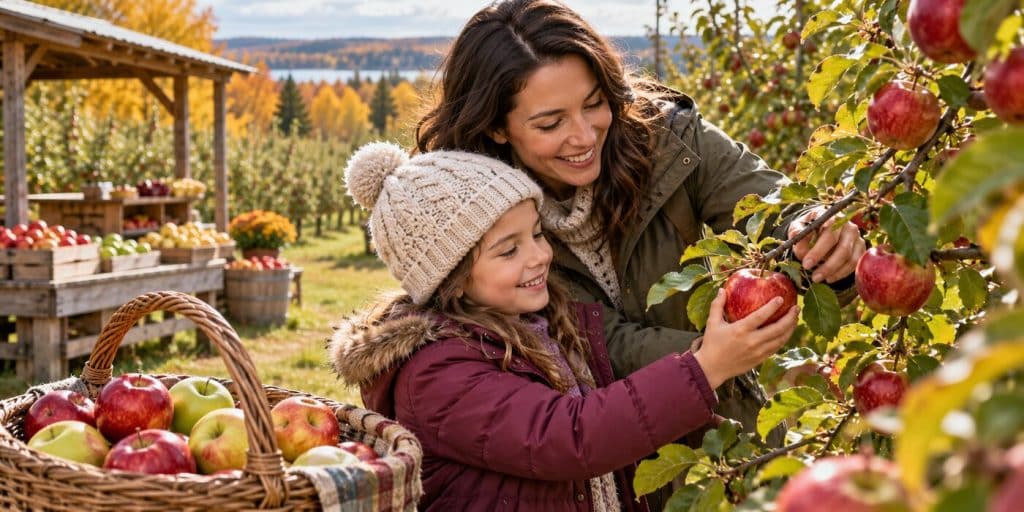
There’s hardly a better way to celebrate apples than by gathering the family for a visit to a nearby orchard. Canada’s most recent Census of Agriculture counted 3,637 farms reporting apple production, offering plenty of inspiration for an autumn outing for those that welcome visitors. October brings harvest activity to growing regions such as British Columbia’s Okanagan Valley, southern Ontario, southern Quebec, and Nova Scotia’s Annapolis Valley, with some late-season varieties in British Columbia and Ontario extending picking into November. A crisp autumn day might call for nothing more complicated than a U-pick adventure, filling a bag together and discovering that apples come in far more flavours than the supermarket selection suggests. For a more immersive closer look at how they grow, a little online research can uncover orchard tours and educational experiences, particularly in British Columbia. For instance, Davison Orchards in Vernon offers tractor-drawn orchard tours, while Taves Family Farms in Abbotsford includes apple-life-cycle learning in its fall school tours. Check picking updates and tour information for orchards near you before heading out!
An orchard visit also gives parents a natural opportunity to explain why apples matter, using words young children can understand. You might describe an apple as “fuel for playing and learning,” then explain that its fibre helps keep their digestive system working properly. The conversation may also extend beyond their lunchboxes: “When we buy apples here, we help the farmer care for these trees and pay the people who pick and pack the fruit.” Children can imagine the journey from orchard to shop, meeting the idea that growing food creates work for farmers, drivers, market workers, and others in their community. Suddenly, that bag of apples becomes both a nourishing snack and a simple lesson in how buying locally grown food helps support the people around them. This concept is at the core (pun intended) of the next activity.
Compare Apple Harvests at Local Farmers Markets
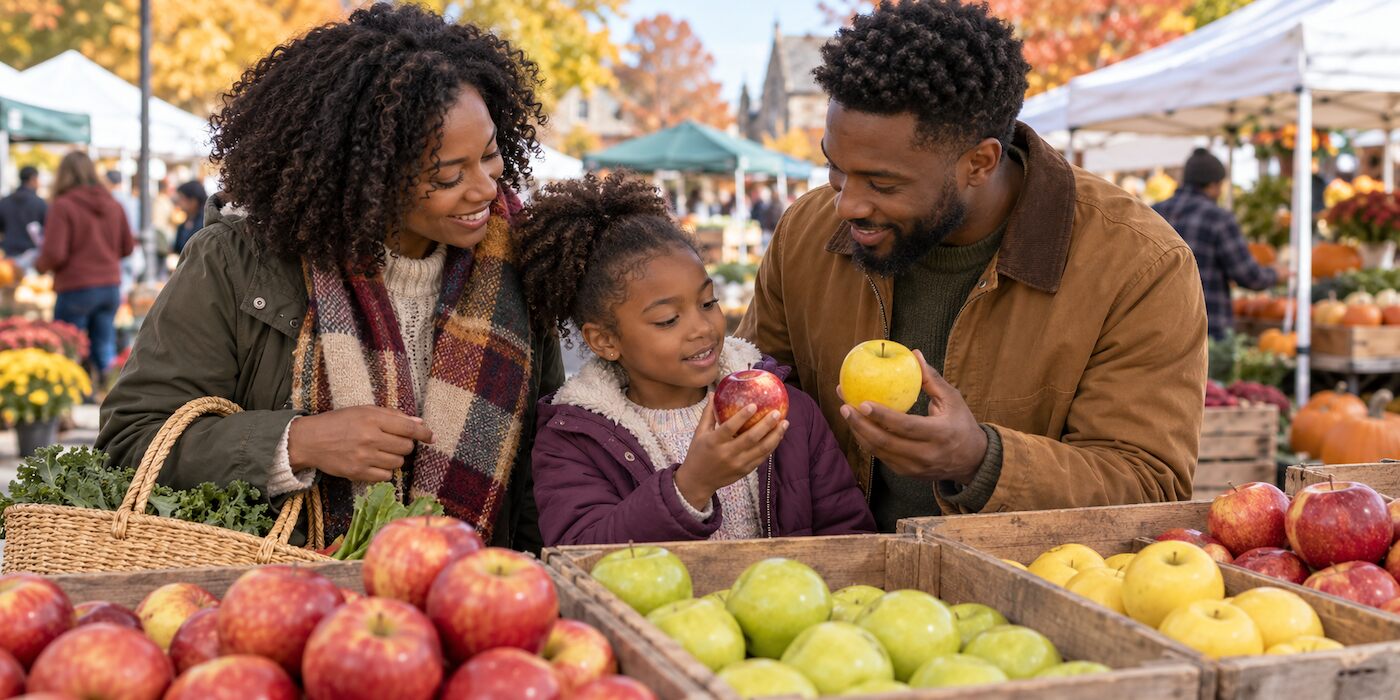
A weekend visit to a local farmers market can turn apple shopping into a fun family investigation. During the autumn harvest, markets in cities and towns across Canada give orchardists a chance to display the fruit they’ve spent months growing—and give your family an opportunity to compare several growers’ apples in one weekend’s outing. Invite the kids to look beyond the familiar red-versus-green distinction: which apples are golden, striped, speckled, tiny enough for a lunchbox, or almost too big to hold in one hand? Ask the growers about differences in texture and flavour, from crisp and juicy to softer, sweeter, or noticeably tart. If samples are available, let everyone compare their impressions before choosing favourites. Then connect those discoveries to the kitchen: an apple that holds its shape when heated can suit a pie, while one that softens readily can be useful for applesauce or apple butter. For jams and jellies, ask how acidity and naturally occurring pectin help influence flavour and setting. Children may discover that the best apple depends on what they want to make with it.
The price tags offer another conversation worth having, especially with adolescents beginning to understand how money works. Start by comparing equal quantities: a small basket and a large bag may have very different prices without one being better value per kilogram. Then ask why some varieties cost more. An apple that requires extra care, comes from a smaller crop, or is particularly popular may command a higher price, while abundant varieties or fruit with cosmetic blemishes may sell for less. Growing practices, labour, storage, and transportation also affect what a grower needs to charge. Explain it as a balance between what it takes to produce the apples, how many are available, and how many people want to buy them. A higher price doesn’t automatically mean an apple will taste better to your family, and a discounted apple isn’t necessarily less nutritious. Give the kids a small budget and a purpose—snacking, baking, or making sauce—and let them weigh flavour, quantity, appearance, and price before choosing their harvest to take home.
Get Baking, Then Kick Back with Some “Apple” TV
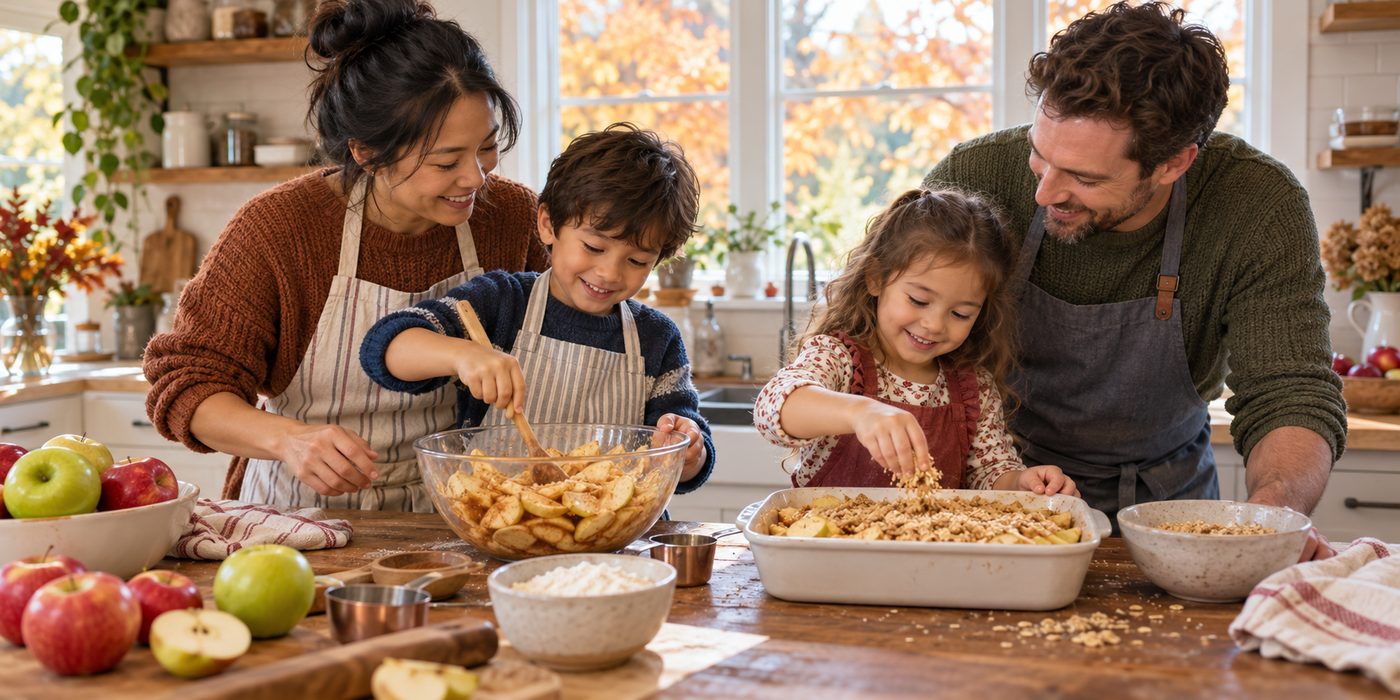
Bring everything your family discovered at the orchard or farmers market home to the kitchen—with a quick stop at a local organic grocery store for any extra ingredients. Those conversations about sweet versus tart apples and firm versus softer flesh suddenly have a delicious purpose when everyone chooses what to make together. Little hands can wash apples, help measure flour, and stir cooled apple pieces with cinnamon for a pie, while an adult handles peeling, slicing, and the oven. For an apple crumble, children can rub softened butter into the dry topping ingredients with clean fingertips, then scatter the crumbly mixture over the prepared fruit. Apple butter offers another way to explore the harvest: youngsters can help measure spices and mash cooled, cooked apples, while parents manage the long, slow cooking that transforms the fruit into a rich spread. Whether you choose a familiar recipe or experiment with a variety you’ve just discovered, give each child a job that lets them proudly announce, “I helped make that!”
Once the kitchen is tidied and your homemade treat has cooled enough to enjoy, snuggle together on the sofa for a cool autumn evening of apple-inspired entertainment. Apples sit at the core—there’s that pun again!—of several memorable screen adventures, even when they aren’t the whole story. Try Snow White and the Seven Dwarfs, whose famous apple needs no introduction; Melody Time, which includes Disney’s musical telling of Johnny Appleseed and his orchard-planting adventures; or Fantastic Mr. Fox, where a farmer’s prized apple cider becomes part of the woodland escapade. Choose whichever suits your children’s ages and tastes, pass around the apple crumble, and enjoy a family evening that brings the day’s discoveries full circle—from the tree to the mixing bowl to a cozy spot under a blanket.
We hope these apple-inspired activities encourage you and your child to explore an orchard, discover new varieties at a farmers market, and bring the autumn harvest home for a little kitchen creativity. Each experience offers a chance to connect with nature, learn where food comes from, and appreciate the people who grow it. The Plant a Seed & See What Grows Foundation is dedicated to helping children across Canada become healthy, resilient, and environmentally connected through meaningful learning experiences like these. If you share our vision, we invite you to support our mission and discover how you can help plant the seeds for the next generation to thrive.