
Celebrating World Cleanup Day, Every Day
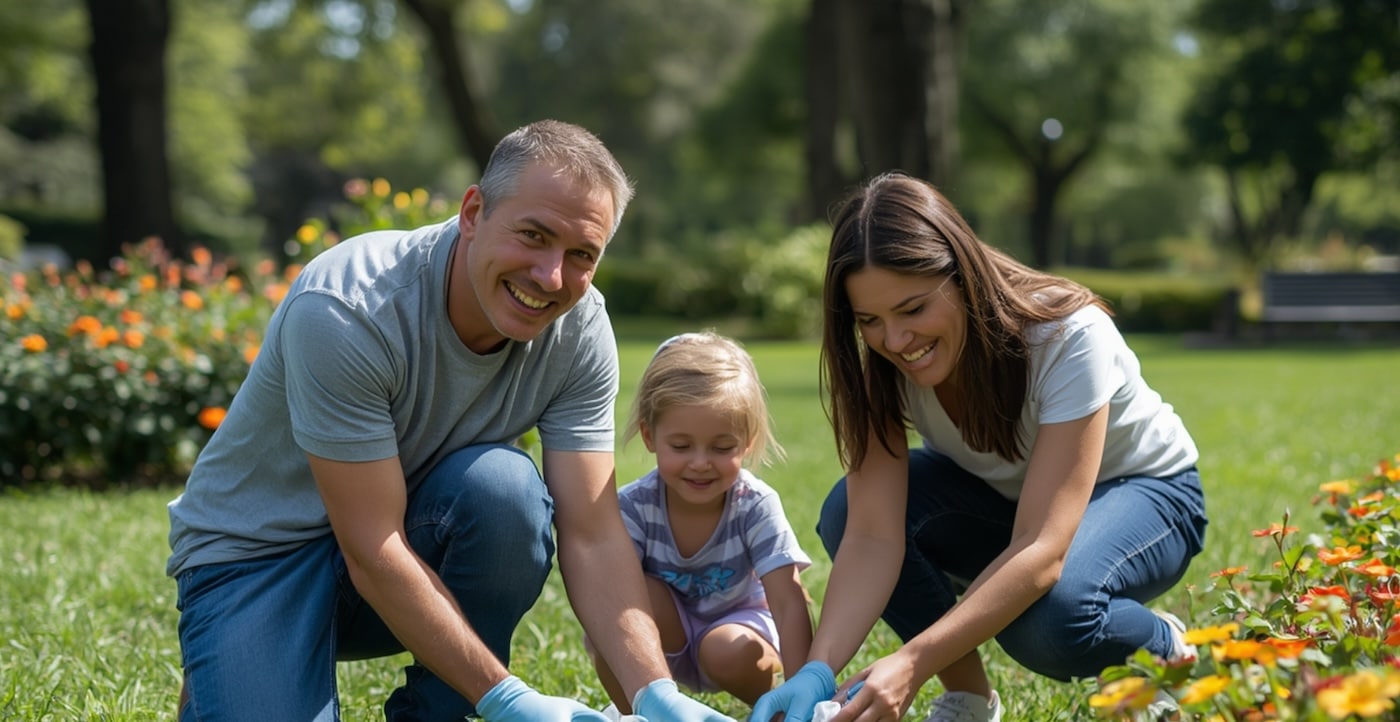
World Cleanup Day may now be a United Nations-recognized observance, but its roots are decidedly grassroots. The movement traces back to Estonia in 2008, when roughly 50,000 people came together to clean up the entire country in a single day; a decade later, the idea had grown into an international movement involving people in countries around the world. The United Nations General Assembly formally proclaimed September 20 as World Cleanup Day in 2023, recognizing the importance of community action in addressing waste and supporting sustainable development. Here in Canada, the idea has found plenty of willing participants, with cleanup activities bringing together families, community organizations, schools and volunteers to care for parks, shorelines, neighbourhoods and other shared spaces. Canadian organizations continue to promote activities across the country, including school-based and community cleanups. The 2026 theme is “From Clean Plates to Clean Cities,” placing particular emphasis on reducing food waste and creating cleaner, more resource-efficient communities.
There is certainly something rewarding about joining neighbours, classmates, friends and families on a designated day to grab a bag, pick up litter and see the immediate results of everyone’s effort. But World Cleanup Day can be more than a single date on the calendar. It can serve as an annual reminder to carry that same sense of responsibility into the other 364 days of the year. Children, in particular, can become powerful ambassadors for this idea because they are capable of noticing things adults often walk past: the wrapper beside a trail, the bottle left near a stream or the food unnecessarily tossed into the garbage. The objective, ultimately, shouldn’t be to raise another generation that simply knows how to clean up. It should be to help raise young people who understand how their everyday choices affect the places they live—and who see keeping those places clean, healthy and sustainable as an ongoing responsibility.
That philosophy is central to what we do at the Plant a Seed & See What Grows Foundation. We believe children learn environmental responsibility most effectively when information is connected to something they can actually see, touch and experience. Rather than simply telling children why litter matters, parents and educators can take learning outdoors and turn a nature walk into an intentional exploration of the same ideas behind World Cleanup Day. A walk through a neighbourhood, forest, park, shoreline or trail can become an opportunity to look for discarded materials, observe their effects on plants and wildlife, discuss where different types of waste ultimately go, and consider what could have been done differently. Today’s feature takes that approach one step further, exploring how a purposeful nature walk can turn the mission of World Cleanup Day into an experience children can carry with them long after the cleanup bags have been put away.
Outdoor Learning Experiences to Inspire Children to Celebrate World Cleanup Day, Every Day of Their Lives
Daily / Weekly Nature Walk + Pickup
Parents and educators can turn environmental awareness into a simple Daily/Weekly Nature Walk + Pickup habit—and there is no requirement for a remote forest trail or wilderness setting. A city park, schoolyard, neighbourhood sidewalk, playground or walking route home can provide just as meaningful an opportunity to connect children with their surroundings. Even taking a few extra minutes to walk through a local park after school and collect litter along the way can make a visible difference, provided children are supervised and use appropriate gloves, grabbers or other safe equipment. The bigger lesson is that caring for the environment isn’t something reserved for special outdoor adventures; it can become part of an ordinary walk through the places children visit every day.
For younger children especially, parents and teachers can explain that small actions become powerful when lots of people make them. One child picking up a wrapper may seem insignificant, but that same child may inspire another youngster watching from a playground, who then decides to pick something up the next time they see it. Soon, the behaviour begins spreading beyond the original walk and into families, classrooms and neighbourhoods. Children don’t always need a large environmental project to become advocates for a cleaner world—they can lead simply by demonstrating that looking after the places we share is something everyone can do. Sometimes, seeing a friend quietly do the right thing is enough to make someone else want to do it, too.
Observing How Wildlife Cleans Up After Itself
For all of our impressive advances in recycling, composting, waste management and sustainable technology, nature still has one cleanup crew that is remarkably difficult to beat: wildlife itself! Let’s have a look at some examples below.
In Canada’s forests, dung beetles and other decomposers help break down animal waste and return its nutrients to the soil. In the mountains, wolverines (keep your distance) and other scavengers help make use of animal remains that might otherwise be left to decay, while ravens and eagles also take advantage of carrion when an animal dies. In Canada’s marshes and wetlands, muskrats consume large amounts of aquatic vegetation and help shape the wetland habitat as they feed, while countless insects and microorganisms break down the plant material they leave behind. In Canada’s lakes, freshwater crayfish and other bottom-dwelling creatures feed on dead plants, animals and organic material that settles into the sediment. And along Canada’s three ocean coasts, creatures such as sea stars, crabs and other scavengers help clean up the seafloor by consuming dead organisms and leftover organic matter. None of these animals carries a garbage bag, drives a recycling truck or operates a composting machine. They simply do what nature has equipped them to do—and, in the process, help keep Canada’s forests, mountains, wetlands, lakes and oceans functioning.
For children, the lesson parents and educators can teach via the above is wonderfully simple: nature doesn’t waste very much, if at all. A dead animal can become food for a scavenger, animal waste can become nutrients for plants, and fallen vegetation can eventually become part of the soil or feed another organism. Canada’s wildlife has been recycling these materials long before humans invented the word “sustainability.” From a tiny beetle working in the forest floor to a crab picking through the ocean bottom, each member of the cleanup crew has a job, even if we don’t always notice it. The next time children walk through a Canadian forest, explore a mountain trail, visit a marsh, stand beside a lake or look out over the ocean, encourage them to ask a simple question: “Who is cleaning up around here?” They may discover that the answer is crawling, swimming, flying or digging nearby—and that nature’s recycling system is operating all around them.
World Cleanup Day…Indoors Too?
Parents and teachers (and school custodians!) appreciate the opportunity to teach World Cleanup Day’s mission in the indoor environments they’re generally charged with maintaining.
Together they (you) can help children recognize that the waste produced by a household or classroom is not so different from the leftover materials found in nature. A banana peel or apple core can become a lesson about how fallen fruit and vegetation are broken down and returned to the earth, while coffee grounds, leaves and grass clippings can be collected for compost rather than treated as garbage. Cardboard boxes, paper scraps and one-sided worksheets can become art supplies, packing material or new classroom projects, while clean containers and jars can be repurposed for organizing pencils, planting seeds or storing small nature discoveries. Even food scraps from a classroom snack can be separated by the children and added to a compost system, eventually helping grow flowers, vegetables or other plants that benefit their own school, garden or neighbourhood. In this way, cleanup becomes more than picking up what someone else has thrown away—it becomes an opportunity for children to identify waste, give it a second purpose and return useful materials to their community, creating on a small indoor scale the same circular thinking and shared responsibility at the heart of World Cleanup Day.
We hope the above article inspires you to help your child (or your students) become more aware of—and protective of—the world around them. Meanwhile, please note that the Plant a Seed & See What Grows Foundation is dedicated to helping children across Canada grow into healthy, resilient, and environmentally connected individuals through meaningful learning experiences. If you share our vision, we invite you to support our mission and discover the many ways you can help us plant the seeds for the next generation to thrive.